
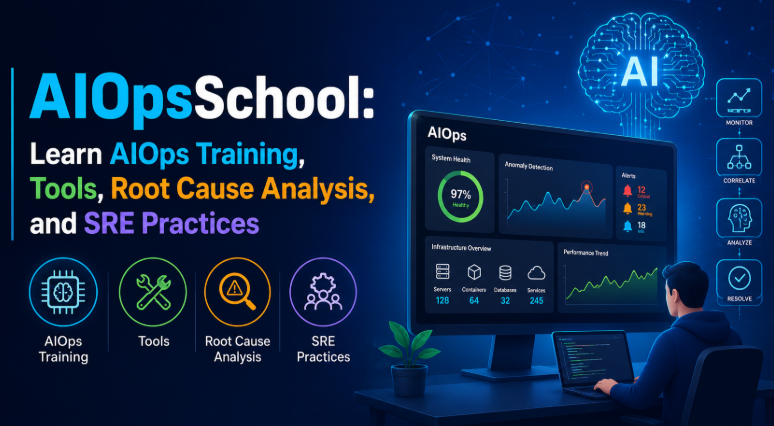
Modern enterprise infrastructure generates more data than human operators can comprehend. On any given day, an IT department might face thousands of daily alerts, disconnected monitoring systems, and an overwhelming amount of raw telemetry data. When a critical outage occurs, engineers often find themselves trapped in war rooms, sifting through conflicting logs while trying to pinpoint the underlying issue. This state of constant alert fatigue and operational complexity drains engineering resources and slows down business innovation.
To break free from this cycle of reactive firefighting, forward-thinking organizations are shifting toward intelligent, data-driven operational models. Building the skills to implement these intelligent systems begins with structured AIOps Training, which empowers engineering teams to transform unstructured system data into actionable business insight. By bridging the gap between raw data and automated action, professionals can build resilient systems that anticipate failures before they impact the end user. Exploring the comprehensive learning tracks at AiOpsSchool provides engineers and architects with the practical framework needed to master these modern operational methodologies and drive meaningful infrastructure automation.
Understanding Modern Intelligent Operations
To grasp the future of enterprise infrastructure management, one must first ask: What is AIOps? Short for Artificial Intelligence for IT Operations, this methodology combines big data, machine learning, and advanced analytics to automate and improve standard IT operations workflows. Instead of relying on rigid, manual thresholds that trigger static warnings, intelligent operations platforms ingest massive streams of telemetry from every corner of an infrastructure deployment. By applying machine learning models to these data streams, organizations can automatically discover patterns, identify anomalous behavior, and group related system events together.
The primary role of artificial intelligence in this domain is to act as a force multiplier for human operations teams. As modern systems grow more distributed through microservices, cloud deployments, and serverless architectures, the sheer volume of performance data increases exponentially. Intelligent platforms analyze these multi-layered datasets in real time, separating background noise from true system degradations. This continuous analysis allows operations teams to maintain complete visibility over massive environments without becoming overwhelmed by the underlying scale or complexity of their infrastructure.
Key Operational Concepts You Must Know
Navigating the ecosystem of modern AIOps in IT operations requires a solid grasp of foundational infrastructure concepts. The entire discipline is built on observability, which goes beyond traditional monitoring by assessing the internal state of a system based on its external outputs. Observability relies heavily on telemetry, which is the automated measurement and collection of data from remote sources. This telemetry is traditionally split into three core pillars:
- Metrics: Numeric values measured over intervals of time, such as CPU utilization, memory consumption, or request rates.
- Logs: Timestamped text records produced by applications or infrastructure components whenever specific events occur.
- Traces: End-to-end journeys of requests as they move through various microservices and distributed infrastructure layers.
Once these telemetry types are collected, intelligent platforms perform event correlation, which is the process of identifying meaningful relationships between disparate data points. By establishing historical baselines, software learns what normal system performance looks like at different times of the day or week. When live metrics deviate from these established baselines, the platform flags them as anomalies.
A Foundations Guide for IT Beginners
The rapid evolution of cloud architecture has made AIOps for beginners a highly relevant area of study for aspiring technology professionals. As enterprise systems expand, traditional manual oversight becomes physically impossible, causing the demand for specialized optimization skills to grow exponentially. Understanding how to apply algorithmic analysis to infrastructure is quickly becoming a foundational requirement for modern technology careers.
Several macroeconomic shifts highlight why learning these concepts is crucial for contemporary IT professionals:
- Career Opportunities: Organizations are actively hunting for professionals who can bridge the gap between traditional systems administration and machine learning engineering.
- Technology Trends: The widespread adoption of distributed architectures, multi-cloud deployments, and serverless computing creates an environments-driven demand for automated analytical tools.
- Industry Adoption: Major enterprises across finance, e-commerce, and healthcare are rapidly restructuring their operations centers around automated anomaly detection platforms to minimize system downtime.
As companies continue to migrate critical workloads to complex cloud environments, professionals who understand both system architecture and data science principles will remain at the forefront of the employment market.
Comparing Modern Methodologies
As organizations modernize their technical teams, distinct methodologies often overlap, leading to confusion regarding their exact boundaries. It is essential to distinguish between AIOps vs DevOps, as well as evaluate how things change when looking at AIOps vs MLOps. While DevOps focuses primarily on breaking down silos between development and operations teams to accelerate software delivery, intelligent operations focus on using data science to improve the reliability of those systems once they are running in production.
Conversely, MLOps is dedicated to operationalizing machine learning models—managing their deployment, training, and version control over time. In contrast, intelligent operations deploy machine learning models specifically as tools to solve infrastructure management issues.
| Concept | Primary Focus | Core Question It Answers |
| DevOps | Continuous delivery, team collaboration, and software release speed. | How can we deploy software updates faster and more reliably? |
| AIOps | Algorithmic analysis of infrastructure data, alert noise reduction, and automated incident response. | How can we use data to maintain system uptime and resolve incidents quickly? |
| MLOps | Standardization, deployment, and lifecycle management of machine learning models. | How do we reliably deploy, monitor, and update predictive models in production? |
Platform Implementation vs Culture Change
Successfully introducing intelligent monitoring platforms requires a deep understanding that technology alone cannot fix a broken operational culture. Many organizations treat these advanced software tools as simple out-of-the-box purchases, expecting immediate resolutions to long-standing systemic issues. In reality, maximizing the value of an investment in AIOps Training requires a deliberate evaluation of internal process maturity and an openness to organizational change.
Teams must learn to move away from isolated data silos and foster deep cross-departmental collaboration. A significant hurdle in this journey is building organizational trust in automation. Engineers who are accustomed to manually validating every single system change must gradually learn to rely on algorithmic recommendations for routine fixes. This shift requires rigorous operational discipline and a commitment to refining telemetry quality, ensuring that automated systems make decisions based on accurate data.
Core Operational Use Cases
Implementing advanced data analysis within infrastructure management unlocks several distinct AIOps use cases that directly improve platform stability. These use cases show how machine learning changes daily infrastructure workflows:
- Anomaly Detection: Standard monitoring relies on rigid thresholds, such as alerting when memory usage passes 90%. Intelligent platforms track historical trends to spot abnormal behavior, such as a memory utilization spike to 75% at 3:00 AM on a Sunday when traffic is traditionally non-existent.
- Event Correlation: During a major system issue, an infrastructure stack might generate thousands of redundant alerts. Intelligent orchestration engines group these disparate messages into a single, comprehensive incident context, eliminating alert noise.
- AIOps root cause analysis: Instead of searching through logs manually, automated engines trace dependencies across applications and infrastructure layers. This allows the system to pinpoint the exact code change or hardware failure that initiated a cascading outage.
- Predictive Capacity Planning: By analyzing historical consumption trends alongside business growth metrics, algorithmic tools calculate exactly when storage arrays or compute clusters will run out of space, allowing teams to provision assets proactively.
- Automated Remediation: When a specific, well-documented issue occurs—such as a disk drive filling up with temporary files—the platform can trigger an automated script to clear the cache, resolving the issue without waking up an on-call engineer.
Real-World Operational Success Stories
Examining actual deployments demonstrates how AIOps use cases provide measurable business advantages across diverse industry sectors.
E-Commerce Infrastructure Scale
A multinational retail platform experienced severe database slowdowns during peak holiday shopping traffic, leading to abandoned shopping carts. By integrating intelligent correlation engines, the system quickly linked a sudden spike in checkout errors to a minor network misconfiguration in a secondary microservice. Instead of spending hours in an emergency meeting, engineers identified the root cause within three minutes, restoring normal checkout functionality and protecting millions in potential revenue.
Banking Transaction Security
A major commercial banking institution struggled with intermittent API latency that disrupted mobile banking transactions. Implementing automated event grouping allowed their operations center to correlate seemingly unrelated latency spikes with micro-updates occurring in their containerized environments. The system isolated the problematic containers and redirected traffic to healthy nodes automatically, maintaining transaction consistency and customer trust.
SaaS Multi-Tenant Management
A global software-as-a-service provider faced persistent challenges with cloud infrastructure cost overruns due to over-provisioning compute resources for unpredictable workloads. By implementing predictive capacity planning tools, their systems began forecasting tenant utilization patterns up to 48 hours in advance. This allowed the infrastructure to scale down safely during low-use hours, reducing overall cloud spend by 22% while maintaining strict service-level agreements.
AIOps Tools You Should Know
Building a modern infrastructure monitoring strategy requires choosing software that matches your organizational goals. Reviewing an AIOps tools list helps teams pick systems that align with their operational maturity.
Monitoring & Observability
Platforms in this space focus on deep telemetry ingestion and real-time visualization. Tools like Datadog, Dynatrace, and New Relic utilize embedded machine learning algorithms to map application topologies, detect performance anomalies, and trace requests across complex, distributed environments.
Event Correlation & ITSM
These solutions specialize in ingesting high volumes of alerts from external systems and organizing them into actionable incidents. PagerDuty, BigPanda, and Moogsoft excel at reducing alert noise, deduplicating repetitive notifications, and routing critical incidents to the correct engineering teams.
Open Source Ecosystem
Organizations that prefer customizable, open-source architectures frequently combine tools like Prometheus for metric collection, Grafana for data visualization, and OpenTelemetry for vendor-neutral telemetry collection. These components can be extended with custom machine learning models using Python-based data science libraries.
Cloud-Native Platforms
Major public cloud providers offer built-in algorithmic monitoring features tailored for their respective ecosystems. Amazon DevOps Guru and Azure Monitor utilize internal machine learning models trained on cloud architecture data to provide automated recommendations, resource optimization advice, and architectural insights.
Reviewing a practical AIOps Tutorial is often the most effective next step for teams looking to evaluate these platforms in sandbox environments before starting a full production deployment.
Common Mistakes Teams Make with AIOps
Deploying algorithmic monitoring tools without a clear strategy often leads to project failures. One major pitfall is treating these platforms as set-and-forget technologies that require no ongoing maintenance or human oversight.
[Poor Telemetry Quality] ──> [Flawed Machine Learning Models] ──> [Incorrect Automations]
To avoid these common issues, teams should watch out for the following pitfalls:
- Alert Overload via Bad Configurations: Failing to tune detection algorithms leads to an excess of false-positive warnings, causing engineers to ignore notifications entirely.Lesson: Continuously tune machine learning sensitivity parameters to match evolving operational baselines.
- Poor Telemetry Quality: Ingesting broken logs or incomplete metric data leads directly to inaccurate algorithmic conclusions.Lesson: Clean, standardize, and validate your data sources before feeding them into an automated analysis engine.
- Premature Automation: Attempting to automate complex, multi-tiered remediation workflows before thoroughly understanding the underlying system dependencies can accidentally worsen minor infrastructure incidents.Lesson: Thoroughly test all automated scripts in staging environments before enabling hands-free production remediation.
- Lack of Stakeholder Alignment: Implementing advanced analytics tools without clear business goals leaves executive leadership confused about the overall return on investment.Lesson: Link operational metrics like incident reduction directly to business outcomes like customer retention.
Failing to address these fundamentals severely limits the effectiveness of AIOps root cause analysis engines, turning a premium software tool into an expensive, underutilized dashboard.
Why AIOps Matters for SRE Teams
Site Reliability Engineering focuses heavily on using software engineering principles to solve operational problems. Introducing algorithmic analysis creates a powerful partnership, positioning AIOps for SRE as a critical standard for maintaining platform stability.
                  ┌──────────────────────────────┐
                  │ Continuous Telemetry Stream  │
                  └──────────────┬───────────────┘
                                 ▼
                  ┌──────────────────────────────┐
                  │ Algorithmic Analysis Engine  │
                  └──────────────┬───────────────┘
                                 ▼
         ┌───────────────────────┴───────────────────────┐
         ▼                                               ▼
┌─────────────────┐                             ┌─────────────────┐
│ Reduce Noise &  │                             │ Root Cause Link │
│ Lower MTTD/MTTR │                             │ to Active SLOs  │
└─────────────────┘                             └─────────────────┘
Algorithmic diagnostic platforms assist reliability engineers by improving several key performance metrics:
- MTTD and MTTR Reduction: Automated anomaly detection dramatically lowers Mean Time to Detection (MTTD) by identifying system regressions early. Concurrently, automated correlation minimizes Mean Time to Resolution (MTTR) by pointing engineers directly to the root cause of an incident.
- Precision Service Level Objective (SLO) Management: Automated systems continuously monitor service level indicators against error budgets. If an infrastructure trend shows a high probability of breaching an active SLO, the system alerts the team well before a violation occurs.
- Toil Reduction: Automating repetitive, manual maintenance tasks frees up reliability engineers to focus on proactive architecture design and system hardening.
Seeing AIOps in Action
To understand how these concepts function in practice, consider this realistic enterprise incident scenario involving a multi-tier cloud application.
Problem
At 2:15 PM on a Tuesday, an online banking application experiences a sudden 40% drop in user login completions. Simultaneously, standard infrastructure alerts begin triggering across multiple components, including container clusters, database pools, and external authentication gateways, flooding the on-call team with conflicting messages.
Detection & Correlation
Instead of treating each alert as an isolated issue, the centralized monitoring platform ingests the entire telemetry stream in real time. The engine groups 150 separate warning alerts into a single active incident context based on their shared timestamps and application dependencies.
Root Cause Analysis & Remediation
The system analyzes system traces and identifies that an automated microservice update deployed at 2:12 PM introduced a database connection leak. The platform automatically flags this specific software deployment as the high-probability root cause of the entire incident.
[System Trace Analyzed] ──> [Database Leak Identified] ──> [Deployment Flagged as Root Cause]
Following pre-approved operational rules, the orchestration platform executes an automated rollback script, reverting the microservice to its previous stable version.
Business Outcome
The entire incident is detected, analyzed, and resolved within four minutes. Normal login behavior resumes automatically, and the error budget is preserved. The on-call engineering team receives a single summary report detailing the issue and the successful automated rollback, preventing a costly extended outage.
Career Roadmap for Becoming an Operations Expert
Transitioning into an enterprise automation role requires a structured approach to skill acquisition. This roadmap outlines the necessary steps to build practical expertise in modern systems engineering:
- Master IT Fundamentals: Build a solid foundation in Linux systems administration, core networking protocols (TCP/IP, DNS), and basic scripting languages like Python or Go.
- Learn Monitoring & Observability: Develop hands-on experience setting up traditional monitoring tools, configuring log aggregation systems, and implementing distributed tracing.
- Acquire Core AIOps Skills: Study how data science applies to infrastructure data. Learn about pattern recognition, time-series analysis, and baseline calculations.
- Gain Hands-On Platform Experience: Deploy and configure enterprise-grade automation platforms in lab environments, focusing on alert deduplication and script integration.
- Choose a Specialization Path: Deepen your knowledge in specific areas like cloud-native infrastructure architecture, advanced machine learning design, or site reliability management.
Following this structured path and pursuing an organized AIOps Course ensures that your skills keep pace with changing industry demands.
Frequently Asked Questions
What is the value of an AIOps Certification for an experienced engineer?
An advanced technical certificate validates your ability to manage modern, data-driven cloud infrastructure. It proves you understand how to apply machine learning principles to complex system telemetry, helping you stand out for senior architecture roles.
How does an AIOps Course differ from a standard cloud administration program?
Standard cloud programs focus primarily on provisioning and configuring cloud resources. An intelligent operations curriculum teaches you how to collect system data, analyze logs algorithmically, reduce alert noise, and implement automated infrastructure remediation.
What topics are covered in an AIOps Foundation Certification?
This introductory credential covers fundamental observability principles, the three pillars of telemetry, baseline calculations, anomaly detection, event correlation, and the core differences between traditional monitoring and intelligent automation frameworks.
Can beginners without a background in data science learn these tools?
Yes. Most modern automated operations platforms handle complex machine learning calculations behind the scenes. Beginners should focus on system architecture, data hygiene, and understanding operational workflows rather than writing custom machine learning models from scratch.
Which tools are best for a beginner to learn first?
Beginners should start with open-source observability frameworks like Prometheus and Grafana to learn metric collection and visualization. From there, explore platform-specific automation tools like AWS DevOps Guru or open-source event managers.
How does automated incident response impact daily IT workflows?
Automated platforms handle high-volume, low-risk infrastructure events like clearing temporary files or restarting services. This keeps operations teams focused on high-value tasks like system architecture design, performance tuning, and security hardening.
Why Get an AIOps Certification?
Validating your technical expertise through structured learning is an excellent way to advance your career. Earning a professional AIOps Certification confirms your ability to manage complex, modern enterprise architectures.
                   ┌────────────────────────────────┐
                   │   Industry Certification       │
                   └───────────────┬────────────────┘
                                   ▼
         ┌─────────────────────────┴─────────────────────────┐
         ▼                                                   ▼
┌──────────────────┐                                ┌──────────────────┐
│ Structured Knowledge  │                            │ Career Growth &  │
│ Base Validation   │                                │ Industry Respect │
└──────────────────┘                                └──────────────────┘
This professional credential provides several key career advantages:
- Career Credibility: Validates your hands-on ability to manage data-driven infrastructure engineering projects.
- Structured Knowledge Base: Ensures you fully understand everything from telemetry data ingestion to automated remediation workflows.
- Professional Growth: Opens up senior infrastructure roles like site reliability architect, platform engineer, or automation lead.
- Salary Impact: Certified professionals who can manage cloud infrastructure costs and reduce system downtime command higher compensation.
- Industry Respect: Demonstrates to leadership teams that you can design resilient systems that prevent costly operational outages.
Completing an AIOps Foundation Certification sets up a clear advancement path for IT pros looking to move into high-level enterprise infrastructure roles.
Where to Learn AIOps
Building a strong foundation in automated infrastructure management requires high-quality, structured educational resources. Choosing an organized learning program helps engineers avoid the confusion of piecing together scattered online tutorials. AiOpsSchool provides comprehensive educational pathways designed specifically for technology professionals looking to build real-world automation skills.
Their specialized educational offerings include:
- Comprehensive AIOps Training: Deep-dive programs that explain data ingestion, algorithmic anomaly identification, and event correlation.
- Structured AIOps Course Tracks: Guided, step-by-step learning modules that build your skills from basic infrastructure monitoring up to advanced platform management.
- Industry-Recognized AIOps Certification: Validation programs that test your practical understanding of automated infrastructure operations.
- Hands-On AIOps Tutorial Guides: Practical laboratory exercises designed to simulate real-world system failures and automated remediation responses.
Focusing on these structured programs helps technical professionals quickly gain the skills needed to run efficient modern enterprise environments.
Final Thoughts
The continuous expansion of cloud-native infrastructure requires a fundamental shift in how teams manage system reliability. Relying entirely on manual oversight and static alerts is no longer sustainable for modern enterprise systems. Transitioning toward data-driven, automated operational models allows companies to turn chaotic data streams into clear, actionable system insights. Investing time in AIOps Training helps engineers and architects move from reactive troubleshooting to proactive system design. Earning an official AIOps Certification ensures your skill set aligns with modern engineering standards, preparing you to lead automation initiatives within your organization. Exploring the comprehensive training paths at AiOpsSchool.com is a great way to start mastering automated IT systems and advancing your cloud engineering career.

