
Introduction
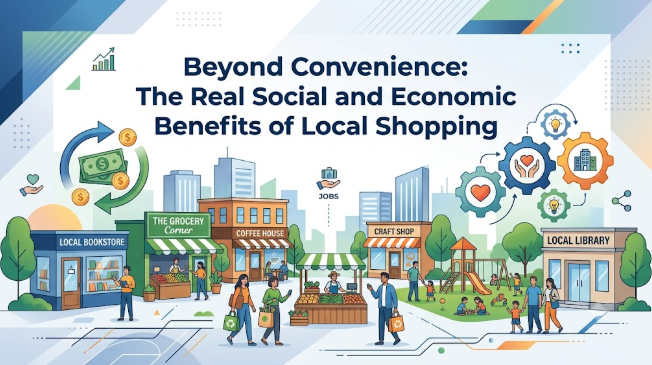
Every time you open your wallet, you are voting for the kind of world you want to live in. In an era dominated by global e-commerce giants and massive big-box retailers, the simple act of choosing where to buy your morning coffee, source your groceries, or hire a contractor carries immense weight.
Our neighborhoods are facing a quiet transformation. As transactional efficiency replaces relational commerce, the unique fabric of our towns and cities risks fading away. However, a powerful counter-movement is taking root: local-first shopping. Choosing to support local businesses is no longer just a feel-good trend; it is a critical strategy for sustainable community development and economic resilience.
This comprehensive guide explores the deep-rooted mechanics of local shopping. We will examine the data-driven economic impacts, the social and environmental benefits, and the ways platforms like BuyMLocal.com bridge the gap between conscious consumers and exceptional neighborhood businesses. Let’s dive into how your everyday choices build a stronger, more vibrant community.
What Is Local Shopping?
At its core, local shopping refers to prioritizing the purchase of goods and services from businesses that are owned, operated, and anchored within your immediate geographic area. These are independent businesses where the owners live in the community, understand its unique needs, and steer their profits back into the neighborhood.
Local shopping spans a wide variety of daily economic activities:
- Food and Beverage: Sourcing meals from independent restaurants, bakeries, craft breweries, and farmer’s markets rather than national fast-food chains.
- Retail: Buying clothing, gifts, books, and home goods from boutique shops down the street instead of global digital marketplaces.
- Services: Hiring neighborhood accountants, mechanics, plumbers, graphic designers, and fitness instructors.
- B2B Transactions: Local business owners choosing neighborhood suppliers, printers, and legal teams to run their operations.
By adopting a local-first mindset, consumers shift from passive consumption to active community stewardship.
Why Local Shopping Matters More Than Ever
We live in an interconnected world where a package can arrive at your door with a single click. While convenient, this extreme convenience comes with a hidden cost. When wealth is continuously extracted from neighborhoods by remote corporations, the local foundational economy begins to erode. Main Streets lose their character, commercial spaces sit vacant, and municipal tax revenue declines.
Prioritizing community commerce is a proactive defense against this erosion. It ensures that towns and neighborhoods remain economically diverse and self-sustaining. When unexpected supply chain crises, inflation pressures, or macroeconomic downturns hit, communities with a robust network of independent businesses recover far more quickly. They rely on local networks, short supply lines, and mutual community support to navigate hardships.
The Economic Impact of Shopping Local
The financial mechanisms of small business support are clear and measurable. When you spend money with an independent business, you initiate an economic process known as the local economic multiplier effect.
Unlike national corporations, which immediately funnel revenue to centralized headquarters or distant shareholders, local business owners keep their revenue moving nearby. They deposit profits in local banks, purchase supplies from neighboring vendors, and hire regional professionals like marketing agencies and lawyers.
Studies consistently show that independent businesses return more than three times as much money to the local economy per dollar spent compared to their chain competitors. This continuous recirculation forms the bedrock of sustainable community development, creating a stable tax base that funds local schools, roads, libraries, and emergency services.
How Local Shopping Creates Stronger Communities
[Your Purchase] ➔ [Local Business Revenue] ➔ [Local Wages & Supplier Payments]
       ▲                                                    │
       └─────────── [Thriving Public Services] ◄────────────┘
                    & Vibrant Infrastructure
A healthy neighborhood requires more than just financial stability; it thrives on civic engagement, social trust, and a shared sense of place. Local shopping contributes directly to these qualitative elements across several key pillars.
Community Investment
Independent business owners are deeply invested in the long-term well-being of their towns because their personal and professional lives are anchored there. They are the primary sponsors of youth sports teams, local charity galas, high school arts programs, and neighborhood festivals. When these businesses thrive, their philanthropic contributions grow, directly enriching local civic life.
Job Creation and Economic Resilience
Small businesses are the primary engines of net new job creation worldwide. By supporting them, you help provide stable, diverse employment opportunities for your neighbors, friends, and family members. This reliance builds long-term economic resilience, preventing a town from becoming vulnerable to the corporate downsizings or store closures of a single distant enterprise.
Local Innovation and Adaptability
Independent entrepreneurs are free to innovate without waiting for approval from a corporate boardroom. They curate unique inventories, adjust their services to meet distinct local demands, and introduce creative business concepts that set their neighborhoods apart. This agility fosters a culture of entrepreneurship, proving that a community can generate its own economic momentum.
Stronger Social Connections and Customer Relationships
Main Street shops function as vital social hubs. When you walk into a neighborhood bookstore or grocery store, you engage in meaningful human interactions. You receive personalized recommendations, share news, and build lasting relationships with proprietors who treat you as a neighbor rather than an anonymous account number. These daily interactions build social cohesion and reduce urban isolation.
Job Creation Through Local Commerce
The employment landscape relies heavily on independent commerce. While multinational firms frequently automate operations or outsource positions to minimize expenses, independent businesses remain inherently human-centered.
- Diverse Opportunities: Local firms offer a wide variety of career paths, ranging from retail management and culinary arts to skilled trades and specialized technical positions.
- Keeping Talent Local: By providing competitive, fulfilling positions close to home, small businesses allow young professionals and skilled workers to build lives in their hometowns, reversing the trend of brain drain.
- Supporting Fair Wages: Independent business owners are highly likely to pay competitive wages and offer flexible environments because their workers are part of the same shared community.
Keeping Money Within the Local Economy: The Multiplier Effect
To understand why a local marketplace matters, look closely at how money flows through an economy. Let’s trace a simple $\$100$ expenditure to see the difference between centralized and local commerce.
Scenario A: The Big-Box Chain Store
You spend $\$100$ at a major multinational retail chain.
- Approximately $\$86$ leaves the community almost instantly to pay for centralized corporate manufacturing, global distribution, and out-of-state administrative overhead.
- Only about $\$14$ remains nearby, primarily distributed via low-wage hourly retail positions.
Scenario B: The Independent Local Boutique
You spend $\$100$ at an independent shop on Main Street.
- Approximately $\$48$ to $\$68$ stays entirely within your local economy.
- The owner uses this money to pay local employees, compensate neighborhood service providers, purchase inventory from regional artisans, and pay municipal taxes.
- Those employees and suppliers then spend their earnings at other nearby businesses, repeating the cycle.
This clear difference demonstrates how conscious spending protects and builds regional wealth.
Supporting Entrepreneurs and Small Business Owners
Behind every independent shop window is a courageous entrepreneur who has invested their savings, time, and energy into realized dreams. These innovators take on significant financial risks to bring distinct concepts to life.
When we intentionally choose independent options, we validate their risks and fuel their growth. This support fosters an environment where creativity thrives, inspiring the next generation of makers, builders, and service providers to launch their own ventures nearby. A community that supports its entrepreneurs becomes a dynamic hub of economic self-reliance.
Building Stronger Neighborhood Relationships
Sociologists often refer to local businesses as “third places”—spaces separate from home and work where people gather, converse, and bond.
Think about the neighborhood coffee house where the barista remembers your name, the independent hardware store where the owner walks you through a DIY repair step-by-step, or the community market where neighbors stop to chat. These businesses provide the spaces where public life unfolds. They foster deep social trust, cultivate a shared sense of safety, and turn anonymous streets into vibrant, welcoming neighborhoods.
The Social and Environmental Benefits of Buying Local
Beyond direct economic metrics, choosing a local lifestyle delivers major benefits for both planetary health and social well-being.
Environmental Benefits
- Reduced Transportation Emissions: Local businesses frequently source their goods from regional artisans, growers, and manufacturers. This shortens the supply chain, dramatically reducing the long-haul trucking, air freight, and transcontinental shipping emissions that drive global climate change.
- Minimal Packaging Waste: Buying from local bakeries, markets, and shops avoids the heavy layers of plastic, styrofoam, and cardboard boxes required for individual home-delivery shipping.
- Preserving Smart Urban Design: Vibrant local business districts encourage walkable communities. When residents can walk or bike to shops, cafes, and service providers, they reduce local traffic congestion and cut down on fossil fuel consumption.
Social Benefits
- Improved Public Health: Access to fresh, seasonally grown food at neighborhood farmer’s markets supports better nutrition and long-term wellness.
- Equal Wealth Distribution: Local ownership spreads economic influence across many independent owners rather than concentrating it in a few corporate boardrooms, fostering a more equitable society.
- Increased Civic Pride: Residents who live in areas with distinct, thriving business corridors show higher levels of civic engagement, volunteerism, and pride in their community.
Preserving Community Identity and Culture
Walkable downtown areas lined with unique architecture, heritage diners, indie bookshops, and artisan galleries give a destination its distinct character. They tell a story about the area’s history, values, and diverse cultures.
The rise of homogenized corporate franchises risks turning distinct towns into lookalike suburbs filled with identical strip malls. Choosing independent options helps preserve the authentic culture of your home. It ensures that regional culinary traditions, unique local crafts, and historic gathering spaces survive and flourish for generations to come.
Data-Driven Realities: Local Commerce vs. Corporate Chains
To illustrate these structural differences clearly, let’s look at direct comparisons across key categories of everyday commerce.
Shopping Local vs. Shopping at Large Chains
| Metric / Feature | Shopping Local (Independent) | Shopping at Large Chains |
| Economic Retention | Returns up to 68% of revenue to the local economy. | Returns less than 15% of revenue to the area. |
| Tax Contribution | Directly funds local public works and emergency services. | Often utilizes corporate tax loopholes; profits leave the state. |
| Product Customization | Curated to fit distinct regional preferences and cultures. | Homers global inventories dictated by distant buyers. |
| Supply Chain Length | Short, regional supply chains with a smaller carbon footprint. | Global supply chains reliant on heavy transit emissions. |
| Job Dynamic | Creates diverse professional roles (marketing, management, creative). | Primarily offers repetitive, entry-level customer service positions. |
Consumer Experience Comparison
| Feature | Local Businesses | National Retailers |
| Customer Service | Personalized, relational, and deeply attentive. | Transactional, automated, and governed by rigid corporate policies. |
| Community Knowledge | Owners possess deep insight into regional needs. | Management handles broad market demographics. |
| Agility & Customization | Highly flexible; accommodates custom and special orders easily. | Rigid; unable to alter standard inventories or protocols. |
| Social Environment | Warm, interactive, and fosters community connections. | Fast-paced, anonymous, and focused on volume. |
Local Shopping and Sustainable Economic Development
True economic development is not just about bringing in large factories or massive corporate fulfillment centers through tax breaks. Sustainable growth comes from within. It focuses on cultivating regional assets, incubating local talent, and ensuring that community wealth stays where it is generated.
When city planners, community leaders, and residents focus on growing their home economy, they create a resilient financial foundation. Independent businesses pay local property taxes, utilize regional infrastructure efficiently, and do not threaten to abandon the community when a more lucrative corporate tax subsidy opens up elsewhere.
Challenges Faced by Local Businesses
Running an independent business is an inspiring journey, but it comes with real obstacles. Small businesses face several major hurdles in the modern economy:
- The Digital Discovery Gap: Many local business owners excel at their crafts—whether baking, crafting, or providing services—but lack the time or large budgets needed to master complex digital marketing and SEO.
- Disproportionate Economies of Scale: Massive corporations buy goods in massive volumes, allowing them to dictate ultra-low prices that independent businesses simply cannot match without sacrificing fair wages or product quality.
- Rising Operational Overhead: Increasing commercial rents, growing utility bills, and insurance premiums present constant challenges for independent storefronts.
- Changing Consumer Habits: The convenience of instant home delivery apps can make consumers forget the value of visiting nearby shops.
To overcome these challenges, small businesses need more than just casual encouragement; they need dedicated infrastructure and smart platforms that make them easy to find and support online.
Practical Ways Consumers Can Support Local Businesses
Supporting your neighborhood economy does not require you to completely upend your lifestyle. Small, intentional adjustments can make a major difference over time.
- Implement the 10% Shift Rule: Commit to shifting just 10% of your current corporate spending toward independent alternatives. Swap one online order a month for a trip to a local boutique, or replace a chain coffee run with a visit to a neighborhood café.
- Write Positive Online Reviews: If you love a neighborhood spot, say so publicly. Write detailed, five-star reviews on search engines and business directories. This free feedback drastically improves their digital visibility and brings in new customers.
- Word-of-Mouth Recommendations: Actively recommend your favorite independent mechanics, dentists, or tailors to neighbors, friends, and family. Personal referrals are incredibly valuable for small businesses.
- Engage Socially: Follow neighborhood businesses on social platforms. Like their updates, leave comments, and share their posts to help them beat algorithmic hurdles without spending a fortune on advertising.
- Explore a Local Business Directory: Before searching broad web browsers or global retail apps for a service or product, check an optimized local business directory like BuyMLocal.com to discover fantastic providers right in your neighborhood.
Local Shopping Checklist for Community Support
Keep this actionable checklist handy to ensure your everyday spending supports your community’s long-term success.
- [ ] Morning Routines: Purchase morning beverages and pastries from independent cafes, bakeries, or roasters.
- [ ] Weekly Groceries: Source seasonal produce, meats, and pantry items from regional farmers markets or independent grocers.
- [ ] Gifts & Celebrations: Buy birthday, holiday, and anniversary gifts from neighborhood boutiques, local craft fairs, or local online marketplaces.
- [ ] Home & Professional Maintenance: Hire independent plumbers, electricians, landscapers, accountants, and legal advisors from your immediate area.
- [ ] Dining Out: Choose family-owned restaurants, food trucks, and independent bistros for weekend meals and gatherings.
- [ ] Digital Advocacy: Leave at least one detailed online review every single week for a neighborhood business you appreciate.
- [ ] Check Local Directories First: Search BuyMLocal.com before purchasing items online to see if a nearby business offers what you need.
How BuyMLocal.com Supports Local Businesses and Communities
                  ┌────────────────────────┐
                  │     BuyMLocal.com      │
                  │  (The Digital Bridge)  │
                  └────┬──────────────┬────┘
                       │              │
    ┌──────────────────▼─┐          ┌─▼──────────────────┐
    │ Independent Stores │          │ Conscious Shoppers │
    │ • High Visibility  │          │ • Easy Discovery   │
    │ • Direct Access    │          │ • Meaningful Spend │
    └────────────────────┘          └────────────────────┘
The greatest barrier to local shopping is rarely a lack of desire; it is a lack of clear visibility. Consumers frequently want to support neighborhood stores but don’t know where to find them. BuyMLocal.com was created to solve this challenge.
As an innovative digital hub, BuyMLocal.com bridges the gap between busy modern consumers and independent business owners. Here is how the platform strengthens our neighborhoods:
Local Business Discovery Made Simple
BuyMLocal.com serves as a centralized, highly searchable local business directory that catalogs independent shops, restaurants, and service providers. It organizes businesses by location, industry, and specialization, making it incredibly easy for users to find exactly what they need right down the street.
Increasing Visibility for Small Businesses
The platform provides independent entrepreneurs with powerful tools to stand out online. By hosting detailed business profiles, showcasing product offerings, and optimizing for search engines, BuyMLocal.com helps small businesses win new customers without needing a massive corporate marketing budget.
Strengthening the Local Commerce Ecosystem
BuyMLocal.com is more than a simple listing service; it is an active engine for community commerce. By connecting neighboring businesses with one another and with local shoppers, the platform builds a resilient network that keeps wealth circulating right where it belongs.
Why Communities Benefit from Platforms Like BuyMLocal.com
When a community adopts a centralized marketplace tool like BuyMLocal.com, it updates its economic infrastructure for the digital age.
- It Evens the Digital Playing Field: It gives small, independent storefronts the high digital visibility they need to compete effectively with multinational e-commerce platforms.
- It Saves Time for Shoppers: It removes the guesswork from conscious shopping, providing clear information on hours, locations, and specialties in one easy-to-use spot.
- It Inspires Civic Pride: Seeing a vibrant, organized display of neighborhood talent encourages residents to appreciate the entrepreneurial energy of their home community.
Frequently Asked Questions (FAQs)
How exactly does local shopping help fight climate change?
Local shopping significantly cuts down on transportation requirements. When products don’t have to travel across oceans or continents via cargo ships and long-haul trucks, they generate far fewer carbon emissions. Additionally, local shopping cuts down on the excessive cardboard and plastic packaging used for home delivery shipping.
Are independent local businesses always more expensive than corporate chains?
Not necessarily. While big-box stores often leverage massive buying power to offer low prices on mass-produced items, local businesses frequently provide superior value. Their products tend to be higher quality, more durable, and come with personalized customer service that saves you money, time, and frustration over the long term.
What is the “local economic multiplier effect”?
This terms describes how money recirculates within a community. When you pay a local business, that money doesn’t disappear to a distant headquarters. The owner uses it to pay neighborhood staff, buy supplies from other local businesses, and pay regional taxes. This continuous circulation multiplies the economic benefit of your original dollar.
How does BuyMLocal.com help a business owner who isn’t tech-savvy?
BuyMLocal.com handles the heavy digital lifting. It offers an intuitive, user-friendly dashboard that makes listing a business simple. The platform optimizes listings for search engines automatically, helping owners reach digital customers easily while they focus on running their day-to-day operations.
Can I still support the local economy if I prefer shopping online?
Absolutely. Many independent businesses now offer excellent e-commerce stores, curbside pickup, and local delivery choices. By using digital platforms like BuyMLocal.com, you can discover independent web stores and shop online while still keeping your money in the community.
How do independent businesses support local public services like schools and parks?
Unlike large corporations that often use tax loopholes to move profits elsewhere, independent businesses pay local property and sales taxes directly. This revenue goes straight into municipal budgets, funding public school systems, road repairs, neighborhood parks, and emergency services.
What kinds of businesses can join the BuyMLocal.com directory?
Any independent, locally owned and operated business can join. This includes neighborhood retailers, boutique shops, independent restaurants, cafes, artisans, service providers (like plumbers, accountants, and salons), and independent consultants.
How does shopping locally build better neighborhood safety and social trust?
Thriving local businesses attract foot traffic, keeping streets lively and well-lit. Main Street store owners also keep an eye on their surroundings and care deeply about neighborhood safety. The personal connections formed between owners and residents build a strong sense of community trust.
What is the easiest way to start a local-first shopping routine?
Start small by committing to the “10% Shift.” Choose one item you buy regularly—like coffee, pet supplies, or weekend dinners—and switch from a national chain to an independent option. Once that becomes a habit, look for other easy opportunities to switch.
Why are independent businesses considered more resilient during economic downturns?
Local businesses operate with shorter, direct supply lines and rely on close customer relationships rather than broad corporate systems. During tough times, their agility allows them to pivot quickly, adjust their offerings, and count on loyal community support to weather the storm.
Conclusion: Small Steps, Massive Impact
The choices we make with our everyday spending carry incredible potential. While global e-commerce systems offer quick transactions, they cannot build a community. They cannot sponsor a neighborhood little league team, provide personal advice on a major project, preserve regional history, or create a welcoming gathering space for friends and neighbors.
Building a stronger, more vibrant community doesn’t require an all-or-nothing transformation. It starts with a simple pause before your next purchase to consider if you can buy it locally.
By utilizing platforms like BuyMLocal.com, you turn that conscious thought into immediate action. You discover exceptional independent options, meet inspiring local entrepreneurs, and ensure your hard-earned money continues to build a prosperous, resilient future for your neighborhood.

