
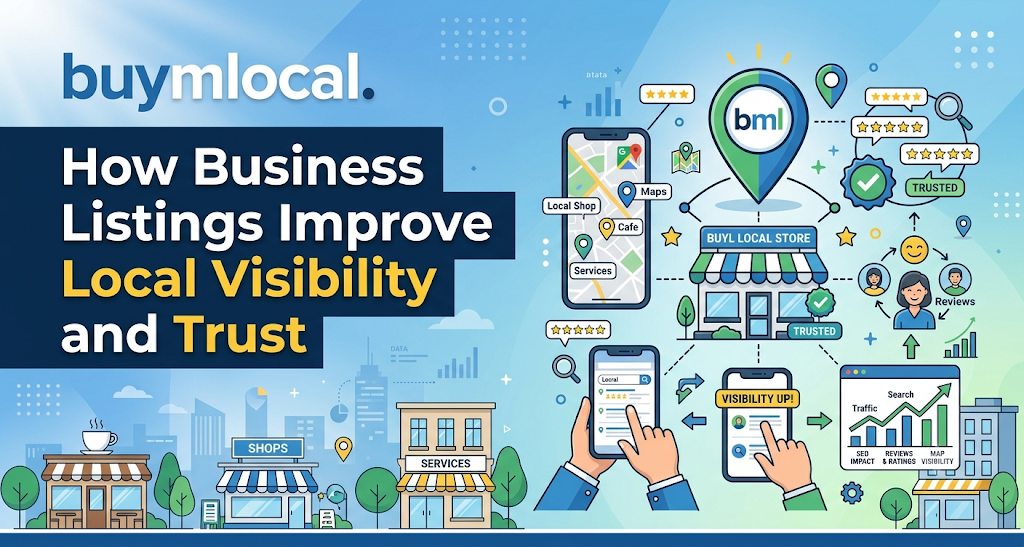
Introduction
When consumers search for a store, service, or dining spot nearby, their first interaction with a brand rarely happens on its homepage. Instead, it happens across online business listings—directory entries, map apps, and local search portals that show basic business information at a glance.
A business listing acts as a digital storefront. If the address is wrong, phone number disconnected, or operating hours missing, potential buyers quickly move to a competitor. Accurate, complete, and actively managed listings do more than help people find a physical location; they validate a business’s legitimacy and signal to both search engines and consumers that the company is active and trustworthy.
Visibility alone does not convert a searcher into a paying customer. A business might appear at the top of a search result, but if it lacks reviews, photos, or basic contact details, consumers will hesitate to engage.
This guide breaks down how local business listings function, why they are fundamental to local search engine optimization (SEO), how to manage them to build customer confidence, and how platforms like BuyMLocal.com help connect local sellers with nearby buyers.
What Is a Business Listing?
A business listing is a public online profile that summarizes essential details about a company. These listings appear across search engines, map applications, online directories, industry portals, and local discovery platforms.
+-----------------------------------------------------------------------------------+
|                            ANATOMY OF A BUSINESS LISTING                          |
+-----------------------------------------------------------------------------------+
| CORE IDENTITY      | Business Name, Primary Category, Secondary Categories        |
+--------------------+--------------------------------------------------------------+
| NAP DATA           | Physical Address, Local Phone Number, Website URL            |
+--------------------+--------------------------------------------------------------+
| OPERATIONAL DETAILS| Hours of Operation, Holiday Hours, Payment Methods Accepted   |
+--------------------+--------------------------------------------------------------+
| ENGAGEMENT CONTENT | Photos, Menu/Services, Business Description, Customer Reviews|
+-----------------------------------------------------------------------------------+
A complete business listing typically includes:
- Business Name: The legal or publicly recognized operating name.
- Physical Address: The exact geographic location or defined service area.
- Phone Number: A functional, local contact number.
- Website URL: A direct link to the official company domain.
- Categories: Primary and secondary classifications defining the core business model.
- Business Description: A concise overview of products, services, and brand value.
- Operating Hours: Standard open/close times, including holiday adjustments.
- Visual Media: High-resolution photos, logos, and videos of the location or work.
- Social & Review Signals: Ratings, written feedback, and owner responses.
Accuracy and consistency across these fields ensure that customers and automated search algorithms receive uniform information about the company.
Why Business Listings Matter for Local Businesses
Business listings sit directly at the intersection of consumer search intent and physical commercial activity. When someone searches for “plumber near me” or “coffee shop open now,” they are rarely casually browsing—they usually intend to call, visit, or buy in the near future.
                  +-----------------------------------+
                  |   Local Search with High Intent   |
                  +-----------------+-----------------+
                                    |
                                    v
                  +-----------------------------------+
                  | Discover Business Listing Online  |
                  +-----------------+-----------------+
                                    |
            +-----------------------+-----------------------+
            |                                               |
            v                                               v
+-----------------------+                       +-----------------------+
|  Inconsistent Data    |                       |  Accurate Data &      |
|  & Low Ratings        |                       |  High Ratings         |
+-----------+-----------+                       +-----------+-----------+
            |                                               |
            v                                               v
+-----------------------+                       +-----------------------+
| Friction & Hesitation |                       | Immediate Confidence  |
+-----------+-----------+                       +-----------+-----------+
            |                                               |
            v                                               v
+-----------------------+                       +-----------------------+
| User Bounces to       |                       | Phone Call, Store     |
| Competitor            |                       | Visit, or Order       |
+-----------------------+                       +-----------------------+
Listings serve two critical functions:
- Enabling Discovery: Helping buyers find services offered in their area.
- Validating Credibility: Confirming that the business is legitimate, operational, and reliable.
Without an accurate online listing, a business remains invisible to an entire segment of local consumers who rely on mobile discovery rather than traditional word-of-mouth.
How Business Listings Improve Local Visibility
Local visibility depends on appearing where consumers look when they need a product or service. Search platforms use location data, category matching, and data consistency to decide which businesses to surface for local queries.
+-----------------------------------------------------------------------------------+
|                        LOCAL SEARCH DISCOVERY TRIAD                               |
+-------------------+---------------------------------------+-----------------------+
| PROXIMITY         | RELEVANCE                             | PROMINENCE            |
| • Geolocation     | • Category selection                  | • Review quantity     |
| • Service radius  | • Business description                | • Data consistency    |
| • Street address  | • Product/service attributes          | • Directory citations |
+-------------------+---------------------------------------+-----------------------+
Listings improve discovery in three main ways:
- Category-Based Matches: When a listing uses explicit categories (e.g., “Auto Repair Shop” or “Italian Restaurant”), algorithms easily identify it for broad category searches.
- Location-Based Matches: Geocoded address data allows platforms to return precise results based on the user’s real-time mobile location or explicit geographic search terms (e.g., “in Downtown”).
- Structured Data Network: Search platforms pull information from across the web. Broad, consistent listings create a cohesive digital network that makes a business easier to recognize and feature.
How Business Listings Build Customer Trust
Getting discovered is only half the battle. Once a user finds a listing, they evaluate its completeness and accuracy to decide whether the business is safe to engage with.
                       +---------------------------------+
                       |    Customer Views Listing       |
                       +----------------+----------------+
                                        |
       +--------------------------------+--------------------------------+
       |                                                                 |
       v                                                                 v
+---------------------------------+             +---------------------------------+
|      CONFIDENCE BUILDERS        |             |        TRUST DESTROYERS         |
| • Consistent Name, Address, Phone|             | • Disconnected or Wrong Phone   |
| • Real Photos of Location/Staff |             | • Incorrect Operating Hours     |
| • Recent Reviews & Responses    |             | • Missing Website or Details    |
| • Complete Service Overviews    |             | • Unanswered Negative Reviews   |
+----------------+----------------+             +----------------+----------------+
                 |                                               |
                 v                                               v
+---------------------------------+             +---------------------------------+
|   High Conversion Likelihood    |             |    High Bounce/Abandon Rate     |
+---------------------------------+             +---------------------------------+
Conflicting details weaken consumer confidence. If a listing shows a business is “Open,” but the customer arrives to find locked doors, that customer is unlikely to return. Similarly, a disconnected phone number or blank profile creates doubt about whether the company is still operating.
Conversely, a listing with updated hours, clear photos, recent reviews, and detailed service descriptions shows that the business is active, attentive, and customer-focused.
Complete Business Listing Comparison
How a listing is managed directly impacts how search engines treat it and how customers react to it:
| Factor | Well-Managed Listing | Poorly Managed Listing |
| Business Information | Complete, accurate, and regularly updated | Incomplete, outdated, or missing core details |
| Address | Precise street address or clearly defined service area | Vague, inaccurate, or old location address |
| Phone Number | Direct, functional local line | Disconnected, incorrect, or unmonitored line |
| Business Hours | Accurately updated, including holiday hours | Inaccurate; leads to customer frustration |
| Photos | High-resolution images of interior, exterior, staff, and work | No photos, low quality, or irrelevant stock imagery |
| Reviews | Actively managed with professional responses to feedback | Unanswered reviews, negative feedback ignored |
| Description | Clear overview highlighting services and unique value | Blank, generic, or poorly written description |
| Customer Trust | High; builds confidence before first contact | Low; creates skepticism and hesitation |
| Local Discovery | Strong; surfaced regularly in local searches | Weak; hidden beneath complete competitor profiles |
| Customer Action | High conversion (calls, visits, website clicks) | High drop-off rate as users bounce to competitors |
How Business Listings Support Local SEO
Local search engine optimization focuses on positioning a business higher in location-based search results. While web design, content, and backlinks are essential, local directory listings—often called citations—play a core role in search performance.
+-----------------------------------------------------------------------------------+
|                       COMPONENTS OF A LOCAL SEO STRATEGY                          |
+-----------------------------------------------------------------------------------+
| CITATIONS & LISTINGS | NAP Consistency, Directory Distribution, Category Alignment|
+----------------------+------------------------------------------------------------+
| ON-PAGE WEBSITES     | Local Keywords, Location Pages, Structured Schema Markup   |
+----------------------+------------------------------------------------------------+
| REPUTATION SIGNALS   | Review Velocity, Rating Averages, Owner Responses          |
+----------------------+------------------------------------------------------------+
| LOCAL BACKLINKS      | Community Partnerships, Local Sponsorships, Regional PR    |
+-----------------------------------------------------------------------------------+
NAP Consistency
Search engines verify data across multiple sources to ensure accuracy. When your Name, Address, and Phone number match across various directories, search algorithms gain confidence in your business’s true location and details, supporting better local positioning.
Category and Attribute Relevancy
Properly categorizing your business provides context to search algorithms. For example, selecting “HVAC Contractor” alongside sub-categories like “Air Conditioning Repair” helps search engines route relevant user searches straight to your profile.
Reviews as Ranking & Conversion Signals
Review volume, recency, ratings, and owner responses act as both algorithmic and social trust signals. Search engines favor profiles with active customer engagement because they signal real-world popularity and quality service.
Note: Listings are one pillar of a complete local SEO campaign. They work best alongside a mobile-optimized website, localized content, and authentic customer reviews.
10 Business Listing Elements That Increase Customer Trust
+-----------------------------------------------------------------------------------+
|                      10 CORE LISTING TRUST ELEMENTS                               |
+-----------------------+-----------------------+-----------------------------------+
| 1. Accurate Name      | 4. Updated Hours      | 7. Quality Visuals                |
| 2. Precise Address    | 5. Correct Categories | 8. Genuine Reviews                |
| 3. Working Phone      | 6. Clear Description  | 9. Official Website Link          |
|                       |                       | 10. Regular Profile Updates       |
+-----------------------+-----------------------+-----------------------------------+
1. Accurate Business Name
- Why It Matters: Establishes official identity and brand recognition.
- Customer Impact: Prevents confusion and reassures searchers they’ve found the right company.
- Common Mistake: Adding unnecessary keywords to the name field, which can trigger platform suspensions.
2. Correct Physical Address
- Why It Matters: Guides foot traffic and defines local geographic relevance.
- Customer Impact: Ensures customers arrive at the right physical location without hassle.
- Common Mistake: Leaving an outdated unit number or failing to hide home addresses for service-area businesses.
3. Working Local Phone Number
- Why It Matters: Provides a direct way for customers to reach you with questions or requests.
- Customer Impact: Offers immediate reassurance that a real person can assist them.
- Common Mistake: Listing central toll-free numbers instead of local area codes, or using an unmonitored line.
4. Updated Operating Hours
- Why It Matters: Communicates exactly when the business is open for service.
- Customer Impact: Prevents the frustration of visiting a store only to find it closed.
- Common Mistake: Forgetting to update special hours for holidays, seasonal changes, or temporary closures.
5. Relevant Business Categories
- Why It Matters: Defines what the business actually does for search filters and categories.
- Customer Impact: Helps customers quickly determine if you offer the specific service they need.
- Common Mistake: Choosing overly broad categories or misclassifying primary offerings.
6. Clear Business Description
- Why It Matters: Summarizes your value proposition, specialties, and background.
- Customer Impact: Gives potential buyers a reason to choose you over a competitor.
- Common Mistake: Writing generic descriptions filled with industry jargon rather than helpful customer details.
7. High-Quality Photos and Visuals
- Why It Matters: Shows real-world proof of your location, team, products, and finished projects.
- Customer Impact: Reduces hesitation by showing searchers what to expect before they visit.
- Common Mistake: Relying entirely on generic stock photography or publishing blurry, poorly lit images.
8. Genuine Customer Reviews & Owner Responses
- Why It Matters: Serves as social proof and reflects customer satisfaction levels.
- Customer Impact: Shows that real people use your services and that you care about feedback.
- Common Mistake: Ignoring reviews entirely or arguing unprofessionally with negative feedback.
9. Official Website Link
- Why It Matters: Directs interested users to your full website for deeper research or online bookings.
- Customer Impact: Provides an easy next step for users who want complete information before buying.
- Common Mistake: Linking to broken pages, generic landing pages, or unsecure (non-HTTPS) URLs.
10. Regularly Updated Information
- Why It Matters: Signals to users and search engines that the business is active and open.
- Customer Impact: Reassures searchers that the listed details are reliable and current.
- Common Mistake: Creating a profile once and never reviewing it again.
How Customers Use Business Listings Before Making a Decision
Understanding the local buyer journey helps show why complete listings matter at every touchpoint:
+-----------------------------------------------------------------------------------+
|                           THE LOCAL BUYER JOURNEY                                 |
+-----------------------------------------------------------------------------------+
| 1. DISCOVERY    | User searches for a local service or need ("dentist near me").  |
+-----------------+-----------------------------------------------------------------+
| 2. EVALUATION   | User compares nearby options based on rating and location.      |
+-----------------+-----------------------------------------------------------------+
| 3. VALIDATION   | User checks reviews, views photos, and verifies business hours. |
+-----------------+-----------------------------------------------------------------+
| 4. ACTION       | User clicks to call, navigates to the store, or visits the site. |
+-----------------------------------------------------------------------------------+
When accurate details are available at each step, friction is minimized, making it easy for the customer to proceed directly to a call, visit, or purchase.
Practical Examples
Example 1: Local Restaurant
A family-owned diner keeps its directory listings updated with its current menu, indoor dining photos, parking details, and holiday hours.
When a traveler searches for “breakfast near me” on a holiday morning, the diner’s updated profile confirms it is open and serving. Seeing recent positive reviews and menu photos, the traveler navigates straight to the restaurant instead of taking a chance on an unverified competitor.
Example 2: Local Service Provider (Plumbing Contractor)
An independent plumbing contractor lists their service radius, licenses, emergency response hours, and photos of past work on local directory platforms.
A homeowner dealing with a leaking pipe discovers the listing. The verified emergency contact number, clear service descriptions, and professional responses to customer reviews reassure the homeowner, prompting an immediate service call.
Example 3: Local Retail Store
A boutique footwear store lists detailed product categories, store photos, wheelchair accessibility details, and its website URL across local directories.
A shopper looking for a specific boot brand finds the listing, confirms parking availability and current open hours, and visits the shop later that afternoon to purchase the boots in person.
Common Business Listing Mistakes That Hurt Visibility and Trust
Even well-intentioned updates can backfire if handled incorrectly. Avoid these common mistakes:
+-----------------------------------------------------------------------------------+
|                        COMMON BUSINESS LISTING PITFALLS                            |
+-------------------+---------------------------------------+-----------------------+
| DATA ERRORS       | MANAGEMENT FAILURE                    | PROFILE QUALITY       |
| • Inconsistent NAP| • Ignoring customer reviews           | • Low-res photos      |
| • Outdated hours  | • Duplicate profile creations         | • Missing descriptions|
| • Wrong address   | • Abandoning listings after creation  | • Broken site links   |
+-------------------+---------------------------------------+-----------------------+
- Inconsistent Name, Address, or Phone (NAP) Details: Variations like “123 Main Street” on one site and “123 Main St. Suite B” on another can confuse search algorithms and users alike.
- Ignoring Negative Reviews: Unanswered complaints suggest poor customer service. Responding calmly and professionally shows prospects that you value customer satisfaction.
- Creating Duplicate Listings: Having multiple listings for the same location dilutes reviews, confuses search engines, and splits user engagement.
- Failing to Update Changed Information: Moving locations or changing phone numbers without updating profiles sends potential customers to the wrong address or inactive lines.
- Using Fake or Unverified Information: Keyword-stuffing titles or using virtual addresses can lead to account suspensions across major listing platforms.
How to Build and Maintain a Strong Business Listing
Managing online listings requires a systematic process to keep information accurate across the web:
+-----------------------------------------------------------------------------------+
|                       BUSINESS LISTING MANAGEMENT CYCLE                           |
+-------------------+---------------------------------------+-----------------------+
| AUDIT & AUDIENCE  | SETUP & OPTIMIZATION                  | MAINTENANCE & ENGAGE  |
| 1. Collect NAP    | 4. Upload crisp visual assets         | 7. Monitor reviews    |
| 2. Choose categories| 5. Link official HTTPS website      | 8. Update hours       |
| 3. Write summary  | 6. Verify phone & physical address    | 9. Audit quarterly    |
+-------------------+---------------------------------------+-----------------------+
- Gather Verified Core Data: Create a master document with your exact official business name, physical address, local phone number, and core service offerings.
- Select Appropriate Categories: Identify your main industry classification and relevant secondary categories across all listing portals.
- Draft a Clear Description: Write a straightforward, informative summary that explains what you do, who you serve, and why customers choose you.
- Add High-Resolution Visuals: Upload clear photos of your storefront, interior space, team members, and completed projects or products.
- Verify Direct Contact Information: Test all phone numbers and form links to confirm inquiries land in the right inbox or call line.
- Include Website and Social Links: Ensure all directory links point directly to your secure, mobile-friendly website.
- Encourage Genuine Customer Reviews: Ask satisfied buyers to leave honest feedback on your profiles, and make it a habit to respond to all reviews.
- Perform Regular Data Audits: Review your business listings quarterly to ensure all details, special hours, and service lists remain accurate.
How BuyMLocal.com Helps Customers Discover Local Businesses
Managing local digital presence includes making sure your business is easy to find on dedicated community platforms. BuyMLocal.com acts as an online discovery resource that connects shoppers directly with nearby service providers, retailers, and local businesses.
+-----------------------------------------------------------------------------------+
|                        HOW BUYMLOCAL.COM BRIDGES THE GAP                          |
+-----------------------------------------------------------------------------------+
| FOR LOCAL BUYERS   | Clear business profiles, verified location info, direct links|
+--------------------+--------------------------------------------------------------+
| FOR LOCAL SELLERS  | Targeted local reach, improved web presence, direct leads   |
+-----------------------------------------------------------------------------------+
By publishing complete business details on local platforms like BuyMLocal.com, companies can:
- Improve Local Reach: Connect with consumers specifically seeking to support nearby businesses.
- Strengthen Online Presence: Create structured, consistent citations that reinforce overall local search visibility.
- Make Discovery Simple: Help buyers find essential operating hours, location details, and contact options in one clear profile.
According to major search engine studies, local searches lead to a store visit or direct inquiry within 24 hours far more often than non-local searches—making dedicated local listings a highly effective discovery channel.
Why Local Businesses Should Pay Attention to Their Online Listings
Maintaining accurate listings is a cost-effective way to improve customer acquisition and digital marketing results.
+-----------------------------------------------------------------------------------+
|                         BENEFITS OF OPTIMIZED LISTINGS                            |
+-----------------------------------+-----------------------------------------------+
| DISCOVERY & COST ADVANTAGES       | BRAND & CONVERSION ADVANTAGES                 |
| • Captures high-intent local traffic| • Builds instant credibility before first contact|
| • Delivers low-cost, steady leads | • Reduces customer friction across mobile     |
| • Maximizes return on ad spend    | • Protects brand reputation across directories|
+-----------------------------------+-----------------------------------------------+
When a business invests time into keeping its online information accurate, it creates a seamless journey from the initial search directly to the point of sale.
Business Listing vs Social Media vs Business Website
Every digital channel serves a distinct purpose in a local marketing strategy:
| Factor | Business Listing | Social Media Profile | Business Website |
| Primary Function | Direct local discovery and quick contact | Community engagement and updates | Complete brand hub and detailed info |
| Target Audience | High-intent local buyers seeking solutions | Existing followers and casual browsers | In-depth researchers and ready buyers |
| Brand Control | Standardized profile fields | Moderated social page environment | 100% full design and content ownership |
| Search Engine Value | High local search and citation impact | Moderate social and brand reach | Essential foundation for organic SEO |
| Key Information | Address, hours, phone, categories, reviews | Posts, updates, events, direct messages | Complete service lists, case studies, checkout |
| Best Used For | Capturing nearby, ready-to-buy traffic | Building community and brand affinity | Converting detailed, educated leads |
Rather than relying on just one tool, the most effective marketing strategies use all three together: business listings bring in nearby search traffic, social media builds engagement, and the company website secures long-term conversions.
Business Listing Optimization Checklist
Use this quick checklist to audit your local business listings:
- [ ] Business Name: Matches legal business branding exactly without added keywords.
- [ ] Physical Address: Accurate street address or defined service area boundary.
- [ ] Phone Number: Active local area code number, tested and working.
- [ ] Website Link: Points directly to a working, secure (HTTPS) domain page.
- [ ] Primary Category: Accurately reflects the core business offering.
- [ ] Secondary Categories: Selected to cover additional specialized services.
- [ ] Operating Hours: Completely filled out and updated for upcoming holidays.
- [ ] Business Description: Clear, engaging summary highlighting value and services.
- [ ] Visual Media: Clean, high-resolution photos of premises, staff, and work uploaded.
- [ ] Customer Reviews: Strategy in place to request reviews and reply to feedback promptly.
- [ ] Consistency Audit: Information matches across all major web directories.
Frequently Asked Questions
What is a business listing?
A business listing is a public online profile that displays a company’s name, address, phone number, website, operating hours, and service details across directory platforms, search engines, and map apps.
Why are business listings important for local companies?
Listings help nearby customers discover your business during high-intent local searches. They provide immediate access to essential contact details, build trust through reviews, and support overall local search visibility.
How do business listings build customer trust?
Accurate information reassures customers that a business is active, reliable, and legitimate. Clear photos, updated hours, correct contact details, and professional responses to reviews help eliminate doubt and encourage engagement.
What is NAP consistency, and why does it matter?
NAP stands for Name, Address, and Phone number. Keeping NAP information consistent across all web directories helps search engines verify your location and business identity, supporting better local search placement.
Do business listings improve local SEO?
Yes. Directory listings act as citations that provide location and relevance signals to search engines. Consistent citations, paired with positive reviews and an optimized website, form a strong foundation for local SEO.
How often should a business update its listings?
Listings should be reviewed quarterly and updated immediately whenever operational details change—such as moving locations, changing phone numbers, adjusting seasonal hours, or offering new core services.
What are the most common listing mistakes to avoid?
Common mistakes include listing inconsistent addresses or phone numbers, ignoring customer reviews, choosing wrong business categories, relying on low-quality photos, and forgetting to update holiday hours.
How do customer reviews affect business listings?
Reviews provide social proof that builds consumer confidence. High ratings and active, professional owner responses signal to both search engines and potential customers that your business is engaged and trustworthy.
Can a service-area business without a storefront use business listings?
Yes. Service-area businesses (like plumbers, electricians, or mobile detailers) can create listings while hiding their physical street address, showing a defined service radius instead.
How does BuyMLocal.com help customers discover local businesses?
BuyMLocal.com offers an accessible directory portal where users can browse, compare, and connect with nearby verified businesses, helping local companies gain visibility within their communities.
Conclusion
Local business listings are far more than simple digital address books—they are vital touchpoints that bridge the gap between an online search and a real-world transaction. When kept complete, consistent, and up-to-date, a listing does the heavy lifting of establishing credibility before a customer ever picks up the phone or walks through your door.
Visibility alone isn’t enough to grow a brand; visibility coupled with accurate, trust-building details is what converts casual searchers into long-term customers. Keeping your hours current, uploading professional photos, maintaining NAP consistency, and actively responding to feedback shows both search algorithms and buyers that your business is reliable and ready to serve.
By taking control of your listings on major search platforms and community discovery hubs like BuyMLocal.com, you build a strong online presence that drives local discoverability, earns customer trust, and supports sustainable business growth.

